


Tuesday Night (by Melissa): Tonight we went to the dance at the town square that was raising money for the St. Valentines Festival on the 19th . After the dance, when we were dripping of sweat, I headed over to the park to play with Fernando, Nelson's son (Nelson is the principal of the school in San Jose Las Flores). Playing on the see-saw reminded me of the theme song of the 2010 winter Olympics ''I believe''. I find the whole song relates to the El Sal experience, but these verses in particular:
You willed me to be all I can be
now nothing can stop me
I believe in the power that comes
From a world brought together as one
I believe together we'll find
I believe in the power of you and I.
The kids at the park willed it to be the best I can be. Seeing their little smiling faces gave me an unstoppable amount of determination and motivation. People from different countries coming together to do such a simple activity together like playing in the park showed me that we have brought the world together. Through interaction with others, we have the power to make a change.
|
Showing posts with label San Jose Las Flores. Show all posts
Showing posts with label San Jose Las Flores. Show all posts
Wednesday, July 30, 2014
Escuela San Jose Las Flores
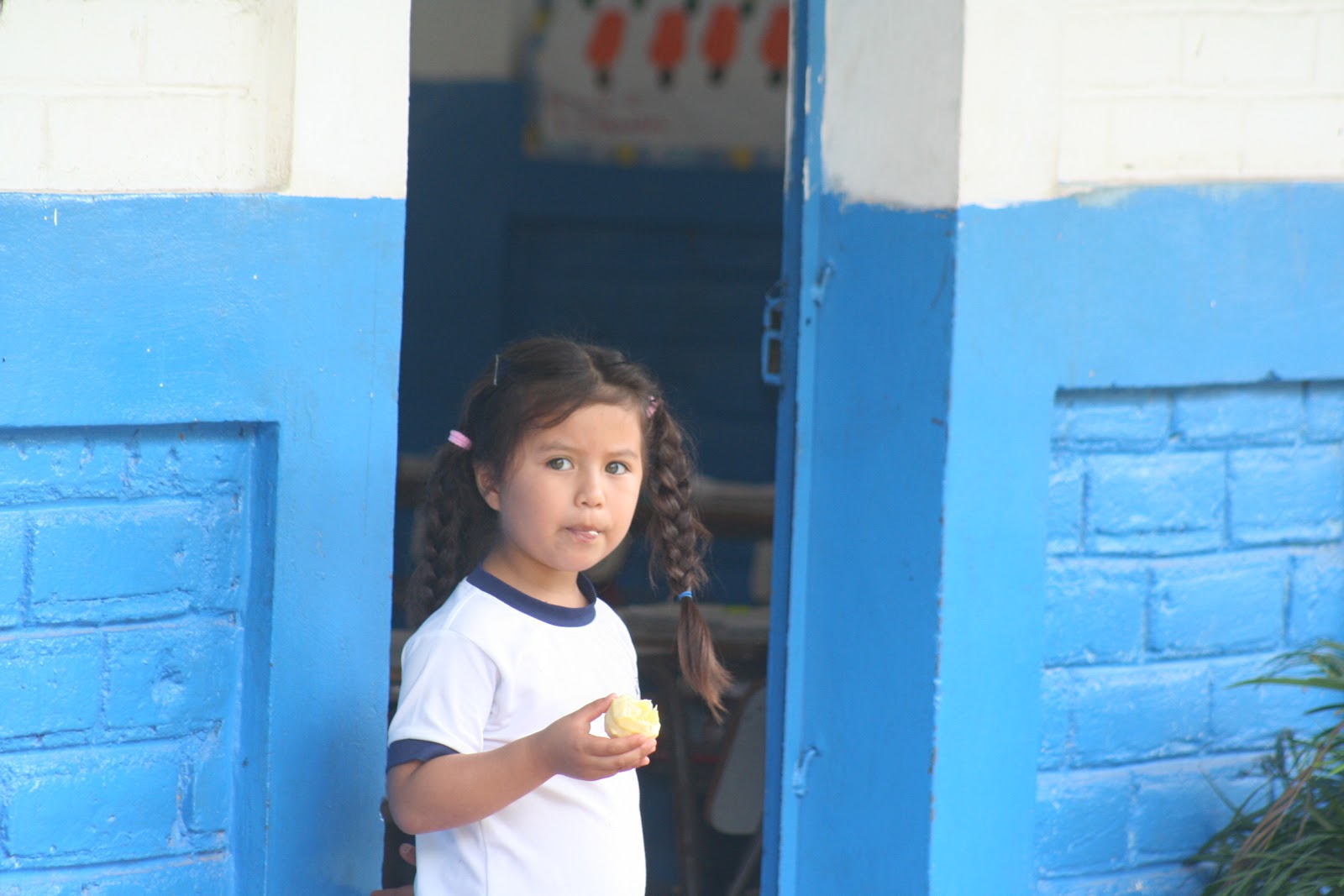
Kindergarten students in San Jose las Flores
No doubt that the trip to El Salvador left unforgettable memories for everyone of us, mainly because this trip was so wonderful and very inspiring in many aspects: beautiful tropical scenery, genuinely hospitable people, a very interesting history of the country with current and past social justice issues and an absolutely amazing group of people to travel with.
For me, the highlight of this trip was a visit at the elementary school in San Jose Las Flores, Escuela San Jose Las Flores.
I heard a lot about the school prior to the trip. Personally, I was wondering if what I was going to see would not disappoint me and ....it didn't. Even more, I still marvel the experience, I only wish I could have spent more time there.
Someone would ask: what is so special about the school in El Salvador. My answer would be: everything.
An African proverb says: “It takes a whole village to raise a child” and the school in San Jose Las Flores is an excellent example of it.
On the way to school!
The school was rebuilt by the community after the 12 year Civil War. Settled at the bottom of beautiful tropical mountains is a home to students from Kindergarten to Grade 9. Students there not only engage in learning and extracurricular activities but also look after the school in many other aspects: cleaning, helping in the school kitchen, and tending the school garden. Their garden is the heart of the school.
It provides not only learning experiences for students but also extra food: vegetables, fruits, herbs. They even have couple of hens. The garden idea came from the school principal, Nelson, a few years ago. With help from the village community the garden grows and prospers. Everything grown there is organic. Nothing gets wasted: coke bottles and plastic bags are used for plant starters, even an old toilet has its function – how about using it as a flower pot?
Why the idea of a garden?
In order to make sure students will be able to attend school every day, present democratic government, FMLN for the first time in El Salvador's history, has been providing children with school uniforms, school supplies, and a daily meal (milk, beans, rice), the school provides the rest, fresh produce from its garden. In many cases students will eat better at school than at home.
Next year, there are plans to produce fish to enrich kids diet and set up an irrigation system.
Walking through the garden we bumped into students and teachers working there. Parents and local villagers also help.
At school students were walking, some running and enjoying their breakfast sitting on benches surrounded by lush, tropical flowers. No teachers on duty (sic!) but everything seemed to be so orderly. A bell rang, some groups quickly disappeared in classrooms, another appeared for breakfast. Everyone looked very happy, younger students were eager to engage in conversations with us.
The regular day at school is divided into two educational shifts: morning for primary grades, afternoon for junior and intermediate. The other half of the day students spend engaged in extracurricular activities of their choice: music, art, working in the garden etc.
Nelson, the school principal, was enthusiastically telling us about his next plans. Interestingly, when he talked about problems his school, teachers and students face, he did not complain, his focus was on the solutions. Such an amazing person, a true visionary who can not only talk about his vision but can deliver it at the same time! His hard work and commitment get people involved.
That evening we visited his family for coffee and homemade cake. The other evening you could spot Nelson sipping beer with locals and chatting, I bet about his new ideas.
Next time you are vacationing in Chalatenango region in El Salvador make sure you visit Escuela San Jose Las Flores in San Jose Las Flores. I can guarantee, it will be worth the effort.
Nelson talking with our interpreter (also named Nelson)
Sunday, February 19, 2012
Here, education is not wasted.
Here is the latest blog post from the students of Holy Trinity and St. FX
Education. In Western culture, it is as commonplace and taken for granted as the weather, yet it's finer points are debated endlessly in our assemblies and parliaments. We quibble over school hours, which extra-curricular activity should get funding, which books to buy and study. For our students, it's a yawn-filled rite of passage, redeemed only by their friends and the occasional interesting course. It's a precursor to the rest of our lives, a prologue that everyone must read before properly beginning their tale.
But how often do we consider the state of education elsewhere in the world? In El Salvador, education isn't merely an ordeal that must be endured to attain your chosen career. It's far more than that. It's the faint, vulnerable hope for a better future, an escape from poverty and physical labour, a path to salvation. Here, students don't come to class baked, ignore homework, or reject the concept of studying and working hard for a better grade. Here, all homework is mandatory to avoid failure, studying is essential and exhausting levels of work are never in question. Here, students toil and pray that all their labour will be enough, that their dreams will finally be fulfilled and their families will no longer have to go hungry.
Here, education is not wasted.
 |
| The primary junior school is San Jose las Flores |
Saturday, February 18, 2012
Our students are back in El Salvador!
Students from Holy Trinity High School and St. Francis Xavier (Ottawa) are back in El Salvador. Here is an excerpt of the material they are currently recording
Saturday, September 17, 2011
Compadres y Comadres Trip - summer 2012

Compadres Staff Trip to El Salvador Summer 2012
Are you interested joining us on a 12-day trip to El Salvador?
key features:
meet key civil society organizations in San Salvador
visit sites associated with Oscar Romero
live and work with teachers in the community of San Jose las Flores
visit the beautiful town of Suchitoto
enjoy a wonderful day at the beach!
If you are interested, please contact Paul McGuire at
mcswa1@gmail.com
you will be added to our e-mail list
upcoming events:
We will have an information table at Christian Community Day - Ottawa, October 7th
Information meeting Monday, November 7 - details to follow
please see www.compadres-elsalvador-canada.ca for more information

Sunday, August 28, 2011
Teacher’s stories, the return to San Jose las Flores – July 10


Sunday, August 21, 2011
We meet the teachers of San Jose Las Flores – July 8


Tuesday, June 21, 2011
Compadres Schedule for this year
Here is the final agenda for this year's trip - very excited to be able to post this. The trip this year will be very different from what we have done in the past - looks like the start of a great experience!
Really looking forward especially to our time in San Jose Las Flores

DRAFT WORKING ITINERARY
ONTARIO TEACHERS DELEGATION – COMPADRES, 3-17 OF JULY 2011
(With focus on San José Las Flores, Chalatenango, CCR)
SUNDAY, JULY 3
7: 45 PM: Arrival to El Salvador on Continental Flight 848. Pick up at Comalapa International Airport and transport to La Amistad Guest House: Avenida Izalco No. 218, Colonia Centroamérica, San Salvador, Tel: (503) 2226-0437
MONDAY, JULY 4
8 AM: Orientation Meeting with Miguel and
9 AM: Meeting with Equipo MAIZ. Popular education experts share with us a brief history of El Salvador.
10: AM: Meeting with CRIPDES
Lunch
2 PM: Meeting with CORDES
Free evening
TUESDAY, JULY 5
7:30 AM: Meeting with National Roundtable on Metallic Mining facilitator, followed by historical-political-cultural tour of San Salvador – including a visit to the National Cathedral, Archbishop Oscar Romero’s tomb, the Divine Providence Chapel (where Archbishop Romero was assassinated), the monument to the civilian casualties of the civil war, the Central American University and the monument to the 5 assassinated Jesuit professors.
WEDNESDAY, JULY 6
8:30 AM: Historical–political–cultural tour, continued
9 AM: Meeting with Concertación de Mujeres
10:30 AM: Visit single mothers sewing cooperative
Lunch
Afternoon: Visit to the Mayan Ruins of San Andrés.
THURSDAY, JULY 7
8 AM: Drive to Chalatenango Department (2.5 hour drive)
9:30 AM: Meeting in CCR in Chalatenango City with Nelson Orellana and the CCR’s Education Committee.
11 AM: Drive to San José Las Flores
12 PM: Lunch at the community restaurant established and operated by organized women. This will also be a chance to meet your homestay families.
3 PM: Meeting with the Community Council Executive where they wíll share the history of the community and their ongoing development and social justice challenges, including their struggle against the Canadian mining companies
4PM: Tour of community and various collective development projects
6PM: Dinner and time for rest and relaxation
NOTE: The following days are slated for San José Las Flores and surrounding communities. The schedule is finalized; however, even when finalized, things may change once on the ground. This year the COMPADRES are trying a few new things. Flexibility will be important, as will an openness to make schedule changes as needed and/or desired.
FRIDAY, JULY 8
8 – 11 AM: Meet and greet activity and chance to talk about mutual needs/expectations.
Lunch
2 – 5 PM: Meet and greet activity continues. (Please note: School is in session. So that teachers do not miss work days, two groups will participate in the meet and greet, one in the morning and another in the afternoon. The same dynamic is likely for any other workshops during the week.)
SATURDAY, JULY 9
8 – 11 AM: Workshop/dialogue on the impact of violence, war trauma, self-esteem, and anxiety in the classroom – discussion co-facilitated by Kim Kramer. (Please note: Because weekends are when teachers spend leisure time with their families, the workshops/dialogues on Saturday and Sunday will only be in the mornings.)
Afternoon: Debriefing, Spanish lessons by Pablito McGuire, other
SUNDAY, JULY 10
8 – 11 AM: Workshop/dialogue on the impact of violence, war trauma, self-esteem, and anxiety in the classroom continues – discussion co-facilitated by Kim Kramer.
Lunch
Afternoon: Debriefing, Spanish lessons by Pablito McGuire, other
MONDAY, JULY 11
8 – 11 AM: Workshop/dialogue on possible ways to use technology in the classroom, given the local context – discussion co-facilitated by Katie Brown.
Lunch
Afternoon: Debriefing, Spanish lessons by Pablito McGuire, other
TUESDAY, JULY 12
8 – 11 AM: Workshop/dialogue on community organization in the face of mining operations as a popular education tool in the classroom – discussion co-facilitated by Célyne Brunet.
Lunch
Afternoon: Debriefing, Spanish lessons by Pablito McGuire, other
WEDNESDAY, JULY 13
8 – 11 AM: Workshop/discussion on popular education pedagogy.
Lunch
Afternoon: Debriefing, Spanish lessons by Pablito McGuire, other
NOTE: For all workshops, a COMPADRES delegate will take systematic notes in order to use the experience in future work. The delegate will work with a local popular educator to also leave a written record in Spanish.
THURSDAY, JULY 14
Farewell group outing – Sumpul River Eco-Park. This will be a chance to say farewell to your host families, teachers, and Las Flores community friends.
FRIDAY, JULY 15
8:30 AM: Leave for Suchitoto, UNESCO World Heritage Site.
Lunch in Suchitoto
Short tour of town
Free afternoon and evening in Suchitoto
SATURDAY, JULY 16
8 AM: Drive to the Costa del Sol for a BEACH DAY
SUNDAY, JULY 17
4:30 AM (sharp): Departure to Comalapa International Airport for 3 participants
Really looking forward especially to our time in San Jose Las Flores

DRAFT WORKING ITINERARY
ONTARIO TEACHERS DELEGATION – COMPADRES, 3-17 OF JULY 2011
(With focus on San José Las Flores, Chalatenango, CCR)
SUNDAY, JULY 3
7: 45 PM: Arrival to El Salvador on Continental Flight 848. Pick up at Comalapa International Airport and transport to La Amistad Guest House: Avenida Izalco No. 218, Colonia Centroamérica, San Salvador, Tel: (503) 2226-0437
MONDAY, JULY 4
8 AM: Orientation Meeting with Miguel and
9 AM: Meeting with Equipo MAIZ. Popular education experts share with us a brief history of El Salvador.
10: AM: Meeting with CRIPDES
Lunch
2 PM: Meeting with CORDES
Free evening
TUESDAY, JULY 5
7:30 AM: Meeting with National Roundtable on Metallic Mining facilitator, followed by historical-political-cultural tour of San Salvador – including a visit to the National Cathedral, Archbishop Oscar Romero’s tomb, the Divine Providence Chapel (where Archbishop Romero was assassinated), the monument to the civilian casualties of the civil war, the Central American University and the monument to the 5 assassinated Jesuit professors.
WEDNESDAY, JULY 6
8:30 AM: Historical–political–cultural tour, continued
9 AM: Meeting with Concertación de Mujeres
10:30 AM: Visit single mothers sewing cooperative
Lunch
Afternoon: Visit to the Mayan Ruins of San Andrés.
THURSDAY, JULY 7
8 AM: Drive to Chalatenango Department (2.5 hour drive)
9:30 AM: Meeting in CCR in Chalatenango City with Nelson Orellana and the CCR’s Education Committee.
11 AM: Drive to San José Las Flores
12 PM: Lunch at the community restaurant established and operated by organized women. This will also be a chance to meet your homestay families.
3 PM: Meeting with the Community Council Executive where they wíll share the history of the community and their ongoing development and social justice challenges, including their struggle against the Canadian mining companies
4PM: Tour of community and various collective development projects
6PM: Dinner and time for rest and relaxation
NOTE: The following days are slated for San José Las Flores and surrounding communities. The schedule is finalized; however, even when finalized, things may change once on the ground. This year the COMPADRES are trying a few new things. Flexibility will be important, as will an openness to make schedule changes as needed and/or desired.
FRIDAY, JULY 8
8 – 11 AM: Meet and greet activity and chance to talk about mutual needs/expectations.
Lunch
2 – 5 PM: Meet and greet activity continues. (Please note: School is in session. So that teachers do not miss work days, two groups will participate in the meet and greet, one in the morning and another in the afternoon. The same dynamic is likely for any other workshops during the week.)
SATURDAY, JULY 9
8 – 11 AM: Workshop/dialogue on the impact of violence, war trauma, self-esteem, and anxiety in the classroom – discussion co-facilitated by Kim Kramer. (Please note: Because weekends are when teachers spend leisure time with their families, the workshops/dialogues on Saturday and Sunday will only be in the mornings.)
Afternoon: Debriefing, Spanish lessons by Pablito McGuire, other
SUNDAY, JULY 10
8 – 11 AM: Workshop/dialogue on the impact of violence, war trauma, self-esteem, and anxiety in the classroom continues – discussion co-facilitated by Kim Kramer.
Lunch
Afternoon: Debriefing, Spanish lessons by Pablito McGuire, other
MONDAY, JULY 11
8 – 11 AM: Workshop/dialogue on possible ways to use technology in the classroom, given the local context – discussion co-facilitated by Katie Brown.
Lunch
Afternoon: Debriefing, Spanish lessons by Pablito McGuire, other
TUESDAY, JULY 12
8 – 11 AM: Workshop/dialogue on community organization in the face of mining operations as a popular education tool in the classroom – discussion co-facilitated by Célyne Brunet.
Lunch
Afternoon: Debriefing, Spanish lessons by Pablito McGuire, other
WEDNESDAY, JULY 13
8 – 11 AM: Workshop/discussion on popular education pedagogy.
Lunch
Afternoon: Debriefing, Spanish lessons by Pablito McGuire, other
NOTE: For all workshops, a COMPADRES delegate will take systematic notes in order to use the experience in future work. The delegate will work with a local popular educator to also leave a written record in Spanish.
THURSDAY, JULY 14
Farewell group outing – Sumpul River Eco-Park. This will be a chance to say farewell to your host families, teachers, and Las Flores community friends.
FRIDAY, JULY 15
8:30 AM: Leave for Suchitoto, UNESCO World Heritage Site.
Lunch in Suchitoto
Short tour of town
Free afternoon and evening in Suchitoto
SATURDAY, JULY 16
8 AM: Drive to the Costa del Sol for a BEACH DAY
SUNDAY, JULY 17
4:30 AM (sharp): Departure to Comalapa International Airport for 3 participants
Monday, June 13, 2011
Some thoughts on the upcoming trip

Our group is preparing for two weeks in El Salvador. As we get ready for a different trip, one where we will be exploring new relationships in San Jose Las Flores, it is important to record some of the thoughts of participnts.
I think that this trip entails more of an exchange through discussions and gathering information for a next trip. I am interested in participating to as many round table discussions (and meeting as many people) as possible!! :)
I feel that I need to go there and start by knowing the people and gaining a better understanding of the social, political & educational systems of El Salvador.
I think we are looking at meeting those people in the community who will identify what their needs are and see if we can help them address these needs. I too see myself going back and I haven't even been there yet.

Sunday, June 5, 2011
First meeting of teacher Compadres group
We met as a group for the first time yesterday. The group is looking at a very different trip this year. We will be spending most of our time in San Jose Las Flores and we will be living with local families - this is a real departure from what we did on our first two trips.

After a very full day, there were some observations that were made that now will be incorporated into the school. Here are some ideas:
Group members expressed an interest in mining issues - we will certainly be discussing these issues with local community leaders and we will look for ways to bring this information back to the classroom.
There is an interest in issues surrounding violence, war trauma, anxiety and socialization. We will look for ways to discuss how some of these issues are dealt with in Salvadoran schools.
There is also an interest in learning more about popular education - we would love to find an opportunity to learn more about this with our Salvadoran partners.
We also would like to investigate how technology is being implemented in the schools and classrooms. We recognize that the schools we visit will not be equiped with many computers, but we know there has been a recent donation of computers to one of the schools - we would like to see how these are being used.
We also talked about process - how will we know what kind of workshops we want to do with our Salvadoran partners? We decided the best way to go is first to spend some time together brainstorming on what we would like to do together. Later in the week, we will plan a full-day workshop based on these discussions.
Finally, we would like to spend an extra day in San Salvador to meet with Concertacion de Mujeres, a coordinting body of women involved in a whole variety of empowerment initiatives throughout the country. We also would like to find a way to transfer our Compadres logo onto a t-shirt! Rene had some good ideas on how to do this.
All in all a great day!

After a very full day, there were some observations that were made that now will be incorporated into the school. Here are some ideas:
Group members expressed an interest in mining issues - we will certainly be discussing these issues with local community leaders and we will look for ways to bring this information back to the classroom.
There is an interest in issues surrounding violence, war trauma, anxiety and socialization. We will look for ways to discuss how some of these issues are dealt with in Salvadoran schools.
There is also an interest in learning more about popular education - we would love to find an opportunity to learn more about this with our Salvadoran partners.
We also would like to investigate how technology is being implemented in the schools and classrooms. We recognize that the schools we visit will not be equiped with many computers, but we know there has been a recent donation of computers to one of the schools - we would like to see how these are being used.
We also talked about process - how will we know what kind of workshops we want to do with our Salvadoran partners? We decided the best way to go is first to spend some time together brainstorming on what we would like to do together. Later in the week, we will plan a full-day workshop based on these discussions.
Finally, we would like to spend an extra day in San Salvador to meet with Concertacion de Mujeres, a coordinting body of women involved in a whole variety of empowerment initiatives throughout the country. We also would like to find a way to transfer our Compadres logo onto a t-shirt! Rene had some good ideas on how to do this.
All in all a great day!
Thursday, April 21, 2011
Encounters with our partners

To support the women's coop, as well as provide more traditional sleeping experience, our group purchased 8 hammocks. The intention is to leave these beds in San Jose las Flores for future delegations to use.
Monday morning was our meet & greet with Holy Trinity's partner school. We headed down to the escula, where we were welcomed with folk dances and an assembly. This was particularly impressive as the Salvadoran students were on their first day of Santa Samana holidays!
During the tour of the school, led by the principal, Nelson, we saw the classroom they will be making into a computer lab. Next door will be their science lab. The school is under massive construction because, for the first time in 30 years, the new liberal government has allocated funding for infrastructure improvements.
The students all headed down the road to the high school football field where we played three huge games of soccer. Watching the game gave the non- players plenty of time to chat with the members of the community.
Several new friendships were formed and five girls from San Jose Las Flores decided to join us for our activity in the afternoon-- swimming in the Rio Sempul.
That evening, after a traditional meal in the Women's cooperative kitchen, many of the girls bonded with their new friends whilst painting each other's finger & toe nails. Others headed into the square to play soccer. Later we met with students. We shared information on our 'typical days' and the challenges of getting a university education in both countries.
Nelson spoke to the Canadian teachers about the importance of 'education for life' -- curricula expectations which are driven a personal, local and ethical theme. He also told us that his yearly school budget from the Ministy of Education is $3600. This is what our board gets PER STUDENT.

A Day of Contrasts

Today laid in stark contrast to the two previous. We started in the Cathedral of San Salvador where we paid our respects to Oscar Romero at his tomb in the basement. We wondered towards the park opposite of the Cathedral; Roberto told us about the massacre that occurred at Romero's Funeral. Strange to think that such a bustling space could have been the location of so many deaths.
We were then led along the outskirts of the market. Block upon block of merchandise are hocked by people of all ages. Shoes, liberated from sweatshops, baby chickens, belts, electronics, clothing and everything imaginable are sold to the poor of the city. The same products would be sold several times more expensive at the malls, but would be inexcessible to so many for purchase. Witnessing this, for some of the HT/St.FX delegates, was the first real moment of discomfort.
Palm Sunday mass centered around the importance of the poor in Jesus' arrival to Jerusalum. Liberation theology reminded listeners of the gifts waiting for them in the afterlife.
The group then travelled into Chalentango province to spend a few days at Trinity's Partner school community, San Jose Las Flores. This quaint little village has a long history of resistance; it is a stronghold of the leftist FMLN group. Here we met with the Community Council, who enlightened our delegation on the issues they face.

(Señor Alamado speaks about the history of San Jose Las Flores before the Peace Agreements in 1992)
The students were captivated by the efforts made by these people to resist mining companies from extracting minerals from their beautiful landscape. The organization of this community was an inspiration to us all. The association was thankful to CRIPDES for their hard work
in helping San Jose Las Flores to achieve all they have.
A late night soccer game and roosters crowing will become the norm.

Sunday, March 27, 2011
new developments
As we start to get closer to this year's trip, some ideas are starting to become clearer. We have been corresponding with Nelson on some key points for this year's delegation. Here are some of the main points.
1. We are discussing the possibility of staying in San Jose Las Flores for up to ten days. We feel that this will give the group and the community even a better opportunity to forge the partnerships which are such an important part of this experience.
2. We are also looking into the possibility of staying with individual families. This will for sure allow us greater opportunities to get to know what life is like for rural Salvadorans.
3. We are working on getting a better idea of the capacity of the computers in the schools. We know there is no internet, but do the computers have the capacity to run software that we use in some of our schools? If so, this may allow us to run a least one interesting workshop with the students.
We are now waiting for answers to some of these questions.

communal kitchen in San Jose Las Flores
1. We are discussing the possibility of staying in San Jose Las Flores for up to ten days. We feel that this will give the group and the community even a better opportunity to forge the partnerships which are such an important part of this experience.
2. We are also looking into the possibility of staying with individual families. This will for sure allow us greater opportunities to get to know what life is like for rural Salvadorans.
3. We are working on getting a better idea of the capacity of the computers in the schools. We know there is no internet, but do the computers have the capacity to run software that we use in some of our schools? If so, this may allow us to run a least one interesting workshop with the students.
We are now waiting for answers to some of these questions.

communal kitchen in San Jose Las Flores
Subscribe to:
Posts (Atom)